

Christopsomo: Greek Christmas Bread (Ingredients & Easy Recipe)
Christopsomo, meaning “Christ’s Bread,” is a significant part of Greek Christmas traditions. This original bread is a delicious treat and a symbol of prosperity and blessings for the coming year.
Join the My Cretan Recipe Facebook group.
Different symbolic ingredients make Christopsomo special. The bread has decorations representing the family’s life, such as boats or animals which are believed to bring good fortune.
These traditions show how culture and food intertwine during the holiday season in Greece. Families prepare Christopsomo with care, ensuring that each loaf is flavorful and beautifully decorated, reflecting their hopes and dreams for the year to come.
Making Christopsomo is a meaningful process that connects you to centuries of Greek heritage.
So let’s see how to create this cherished bread in your own kitchen, and discover tips and secrets that reflect its significance during Christmas celebrations in Greece.

Christopsomo: Christ’s Bread
Christopsomo, meaning Christ’s Bread in Greek, is tied to Christmas traditions. And even when preparation and significance have evolved, it still reflects the culture and values of the Greek Orthodox community.
The origins of Christopsomo can be traced back to early Byzantine time,s when it was a symbol of the birth of Christ. Traditionally baked on Christmas Eve, it’s meant to be shared during the Christmas meal, reinforcing family bonds and religious devotion.
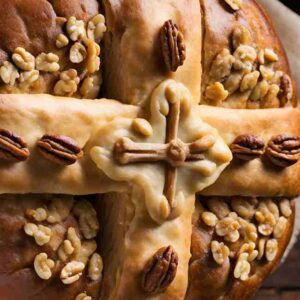
The bread is often adorned with a cross, illustrating its sacred meaning. Locally specific customs dictate its shape and decoration, adding unique touches based on regional practices. As time passed, the bread became sweeter and more elaborate, reflecting changes in social and economic conditions.

Traditions and Customs
In Greek culture, the preparation of Christopsomo is a cherished tradition primarily carried out by women. The bread is typically made with simple ingredients and is decorated with nuts or seeds.
On Christmas Day, families gather around the table to eat this special bread together, and the first slice is offered to Christ. Additionally, the decorative elements are believed to bring prosperity, enhancing the holiday’s spiritual significance.
Ingredients and Preparation
Making Christopsomo requires specific ingredients and careful preparation. This bread uses a mix of traditional flavors to create a festive Christmas bread.
Ingredients for Christopsomo
- 1.2 kg all-purpose flour
- 1 tsp salt
- 220 ml dry red wine
- 110 ml olive oil
- 50 ml cognac
- 50 ml freshly squeezed orange juice
- Orange zest from 2 oranges
- Fresh or dry yeast for rising
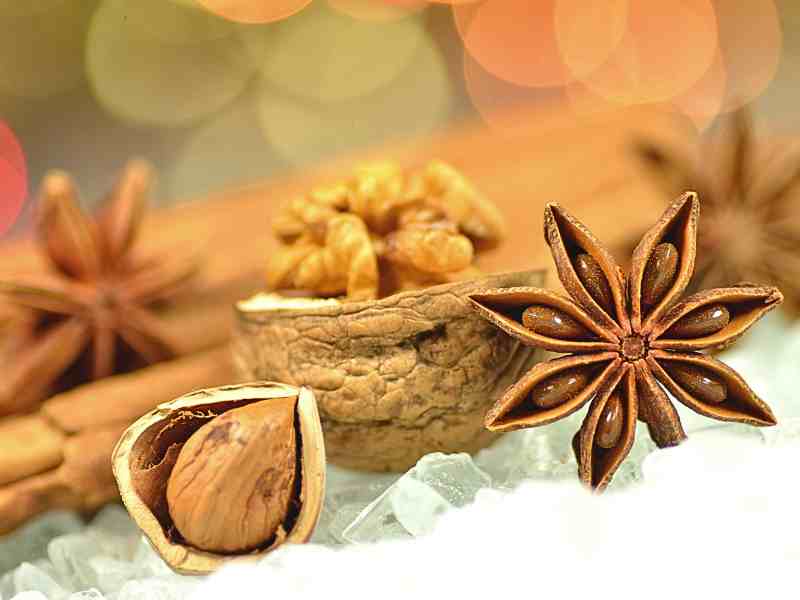
- Spices and seeds (a mix of ground star anise, mahlepi, and anise seeds)
- Chopped walnuts for texture and taste
- Optional: raisins, cloves, whole nuts for decoration
Recipe Steps
- Mix dry ingredients: In a large mixing bowl, whisk together the flour, salt, and spices.
- Combine liquids: In a separate bowl, stir together the water, yeast, and a couple of tablespoons of flour. Allow it to sit for about 10 minutes until bubbly.
- Form the dough: Add the yeast mixture, olive oil, cognac, orange juice, and zest to the dry mixture. Stir until everything is well combined. Add nuts, cloves, and raisins if you like them. Save some dough to decorate the final bun.
- Knead: Transfer the dough to a floured surface and knead for about 10 minutes until it is smooth and elastic.
- First rise: Place the dough in a greased bowl, cover it with a towel, and let it rise for 1 hour in a warm place.
- Shape and proof: After the first rise, press the dough to release air. Shape it into a round disk and place it in a round pan. Cover again and let it proof at a warm temperature.
- Decorations: While the bread rests, roll the extra dough into strips to create the cross and add full nuts at each end of the cross. Before baking, brush the top of your bread with a beaten egg and set the cross on the top.
- Baking the bread: Bake in a preheated oven at 200°C for 25 to 30 minutes. Then, lower the temperature to 170°C and continue baking for an additional 10 minutes.
Make sure to follow these steps closely for the best results!

Decorative Elements
The decoration of Christopsomo is elaborate and meaningful. Common elements include a variety of nuts, seeds, and fruits, which symbolize prosperity and fertility. Cloves are often used not only for flavor but also as a decorative accent that adds a distinct appearance.
The bread may be brushed with an egg wash, giving it a golden, shiny finish. In addition, artistic patterns are created using dough, enhancing its visual appeal. All these decorations are intended to bring blessings and good fortune to your home during the Christmas season.

Curious Facts about Christopsomo
- Christopsomo, or Greek Christmas bread, holds a special place at the holiday table. Its serving traditions and complementary pairings enhance its significance during festive occasions.
- You typically serve Christopsomo at family gatherings during Christmas. It is common to prepare the bread the day before Christmas Eve. Many families make a point to place it at the center of the table.
- Before serving, the head of the household solemnly blesses the sacred bread, tracing the sign of the cross over it in a gesture of reverence. He then carefully slices it, distributing pieces to each family member gathered around the table, embodying the spirit of unity and tradition.
- The bread is often decorated with a cross, symbolizing Christ. This decoration reflects its sacred importance in Greek culture.
- Christopsomo is rich in symbolism; each aspect of the bread reflects care and traditions passed down through generations, making it an essential part of Greek Christmas celebrations.
- In some regions, people add the initials of family members to the bread, wishing blessings for each person in the household.
Pairings and Occasions
Christopsomo can be served with a variety of cheeses, olives, and cured meats. You may also enjoy the bread with a glass of red wine, adding a festive touch to the celebration.
Finally, if you enjoy this bread, you can also serve it on special occasions beyond Christmas. Events like New Year’s celebrations or family reunions are also perfect for this Greek bread

Christopsomo
Ingredients
- 1.2 kg flour all-purpose
- 1 tsp salt
- 220 ml red wine dry
- 110 ml olive oil extra virgin
- 50 ml cognac
- 50 ml orange juice
- orange zest from 2 oranges freshly squeezed
- 7 grams yeast fresh or dry
- spices and seeds a mix of ground star anise, mahlepi, and anise seeds
- chopped walnuts for texture and taste
- raisins, cloves, whole nuts for decoration
Instructions
- In a large mixing bowl, whisk together the flour, salt, and spices.
- In a separate bowl, stir together the water, yeast, and a couple of tablespoons of flour. Allow it to sit for about 10 minutes until bubbly.
- Add the yeast mixture, olive oil, cognac, orange juice, and zest to the dry mixture. Stir until everything is well combined.
- Add nuts, cloves, and raisins if you like them. Save some dough to decorate the final bun.
- Transfer the dough to a floured surface and knead for about 10 minutes until it is smooth and elastic.
- First rise: Place the dough in a greased bowl, cover it with a towel, and let it rise for 1 hour in a warm place.
- After the first rise, press the dough to release air. Shape it into a round disk and place it in a round pan. Cover again and let rest at warm temperature.
- While the bread rests, roll the extra dough into strips to create the cross and add full nuts at each end of the cross.
- Before baking, brush the top of your bread with a beaten egg and set the cross on the top.
- Bake in a preheated oven at 200°C for 25 to 30 minutes. Then, lower the temperature to 170°C and continue baking for an additional 10 minutes.
Notes
- The decoration of Christopsomo is made with nuts, seeds, and fruits, which symbolize prosperity and fertility.
Nutrition


Pin For Later!
How to Make Christopsomo, Greek Christmas Bread



Gabi Ancarola
Gabi is a travel writer who has lived in Crete for over a decade. Through her blog, Crete Insider, she has helped travelers uncover local experiences. Passionate about food and Cretan cuisine, she now attends Greek cooking lessons to bring the island’s flavors straight to your kitchen!
>> Interested in learning to cook in Crete, or discovering all of the top spots to eat in Chania and around the island? Book a food tour or plan your trip with me.


