

Authentic Homemade Greek Lemonade (Spitiki Lemonada)
A traditional Greek lemonade syrup made with fresh lemon juice, sugar, and fructose, meant to be diluted when served. Refreshing, practical, and easy to store for any season. Nothing says Greek summer more than this drink. Let’s make it!
Join the My Cretan Recipe Facebook group.
Greek homemade lemonade, or spitiki lemonada, is a kitchen staple across Greece. It’s not the kind you serve straight from the jug.
This is a concentrated lemon syrup, made with freshly squeezed juice, designed to be diluted with cold water for serving. It’s how Greek homes offer a quick refreshment to guests in the summer—and keep a taste of citrus brightness ready for winter.

You’ll start with about 2 liters of lemon juice, which comes from around 30–35 medium lemons (depending on size and juiciness).
The lemons rest briefly in warm water to loosen the juice, and the juice is combined with a simple syrup made from sugar and fructose. Fructose enhances the lemon flavor and reduces the amount of sugar needed. If you don’t have fructose, just use sugar only.
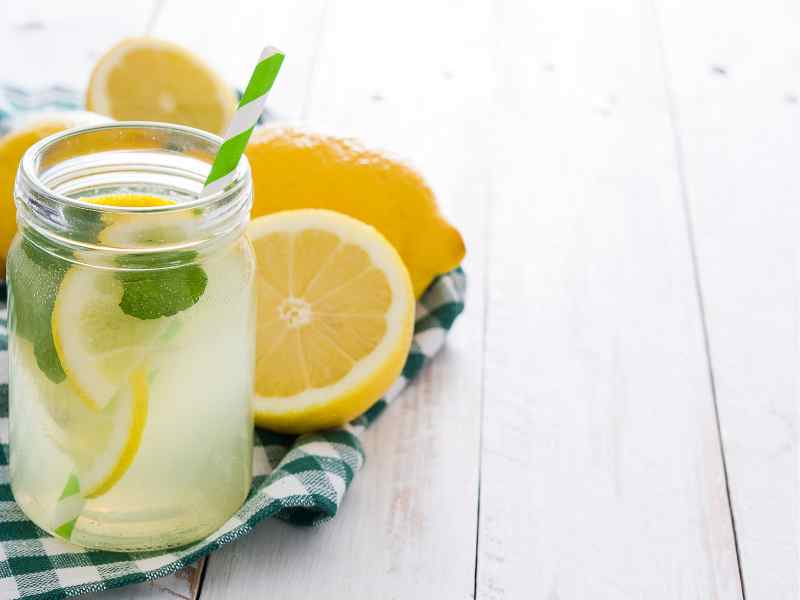
The final result is about 4 liters of lemon syrup—concentrated, bright, and smooth. It can be portioned and frozen, so you can enjoy homemade lemonade even when citrus is out of season.
How to Make the Lemonade – The Real Way
Start with your lemons. Place them in a large bowl and cover them with warm (not hot) water. Let them sit for about 15 minutes. This helps release more juice when you squeeze them.


While the lemons soak, put the sugar and fructose in 2 liters of water in a large pot and bring to a boil. Stir gently until both dissolve and the syrup thickens slightly—don’t overcook it.
You’re not making jam, just enough to have a syrupy base. Turn off the heat and let it cool to room temperature.


Now, squeeze the lemons. You’ll need about 2 liters of juice, so aim for 30–35 lemons, depending on their size and quality. Pour the juice through a fine strainer. You can keep a bit of the pulp aside—it adds flavor to a lemon cake and reduces waste. (Here’s the lemon pulp cake recipe.)


Once the syrup is cooled, mix it with the lemon juice. Stir well. That’s it. You now have 4 liters of lemon syrup, which is not yet ready to drink.
For every 250 ml glass, mix about 75 ml of syrup with 175 ml of cold water. That means this batch can make around 53 glasses of lemonade.


You can store the syrup in sterilized bottles in the fridge, or freeze it in small containers to use throughout the year.


Authentic Greek Lemonade Syrup (Spitiki Lemonada)
Equipment
- 1 Citrus juicer
Ingredients
- 2 liters fresh lemon juice (from ~30–35 lemons)
- 2 liters water
- 600 grams sugar
- 400 grams fructose (or 1 kg total sugar if no fructose available)
Instructions
- Soak the lemons in warm water for 15 minutes.
- Mix the sugar and the fructose in 2 liters of water and stir until dissolved.
- Bring this water to a boil.
- Let the syrup cool.
- Squeeze the lemons to get 2 liters of juice.
- Strain through a fine sieve. (Separate some pulp for a different recipe if you wish).
- Mix the juice and the cooled syrup.
- Store in clean glass bottles in the fridge or freezer.
- To serve: mix ~75 ml syrup with ~175 ml cold water (1:3 ratio).
Notes
- 4 Liters of syrup make around 53 glasses of homemade lemonade.
Nutrition
Variations
- Replace some of the lemon juice with orange juice for a softer citrus blend.
- Add lemon zest before boiling the syrup for a slightly more aromatic result. Strain before mixing.
- Use honey for part of the sugar (about 200g) for a different depth.

Tips
- Use freshly squeezed juice only—bottled juice won’t taste the same.
- Don’t skip cooling the syrup before mixing with juice—heat can alter the lemon flavor.
- Freeze in 250 ml portions for easy access all year.
- Add mint leaves or thin cucumber slices to your glass before serving.
This lemonade syrup is a smart way to preserve lemon season. Once made, you’re just seconds away from a refreshing drink.
With one prep session, you get over 50 servings—perfect for summer days, family visits, or just a glass after work. Keep some in your freezer, and citrus season never ends.


Pin for Later!
How to Make Authentic Greek Lemonade



Gabi Ancarola
Gabi is a travel writer who has lived in Crete for over a decade. Through her blog, Crete Insider, she has helped travelers uncover local experiences. Passionate about food and Cretan cuisine, she now attends Greek cooking lessons to bring the island’s flavors straight to your kitchen!
>> Interested in learning to cook in Crete, or discovering all of the top spots to eat in Chania and around the island? Book a food tour or plan your trip with me.


