

Bakaliaros Skordalia and Other Greek Recipes for Oxi Day (October 28)
On October 28, Greece celebrates Oxi Day, a national holiday honoring courage, unity, and history. Families gather across the country to watch parades and then share a meal with traditional dishes. Let’s discover how to prepare the most famous of them: fried cod with garlic potato dip (bakaliaros skordalia).
Join the My Cretan Recipe Facebook group.
Every October 28, Greece celebrates Oxi Day, the day in 1940 when the country bravely said “No” to the Axis powers.
The word “Oxi” means “No” in Greek, and this anniversary has become a symbol of courage, unity, and national pride. Across Greece, the day is marked with military and student parades, memorial services, and family gatherings.

And like every important occasion in Greece, it is also a day for food. Although there is no single official menu for the celebration, certain dishes are closely associated with the holiday. Over time, one in particular has become the star of the table: fried cod with garlic potato dip, better known as Bakaliaros Skordalia. Let’s see how we make it!
Bakaliaros Skordalia: Fried Cod with Garlic Potato Dip
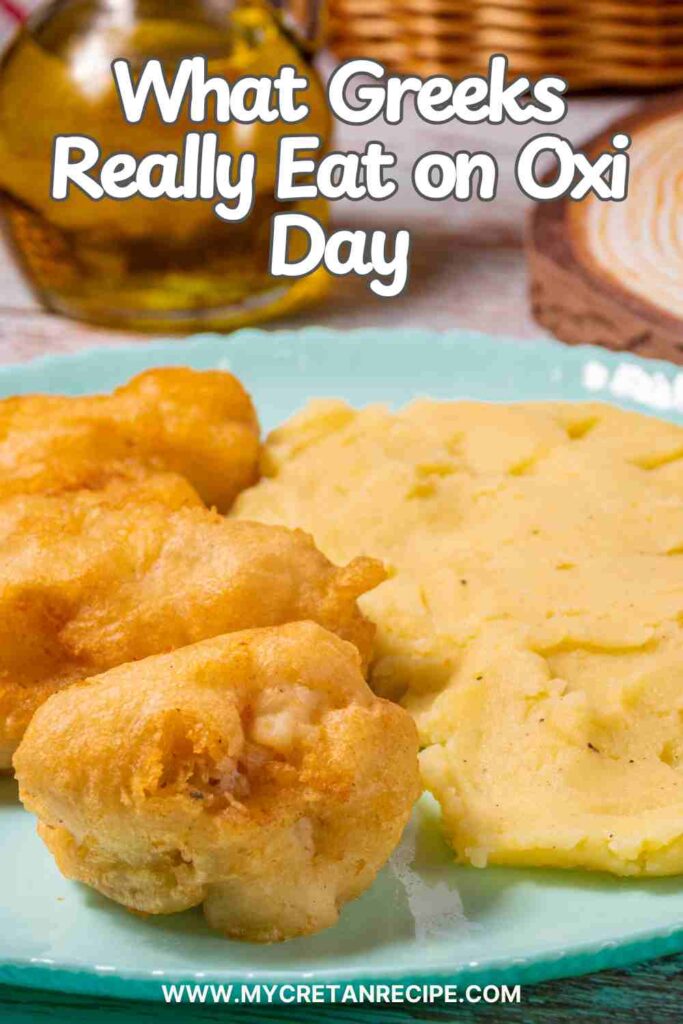
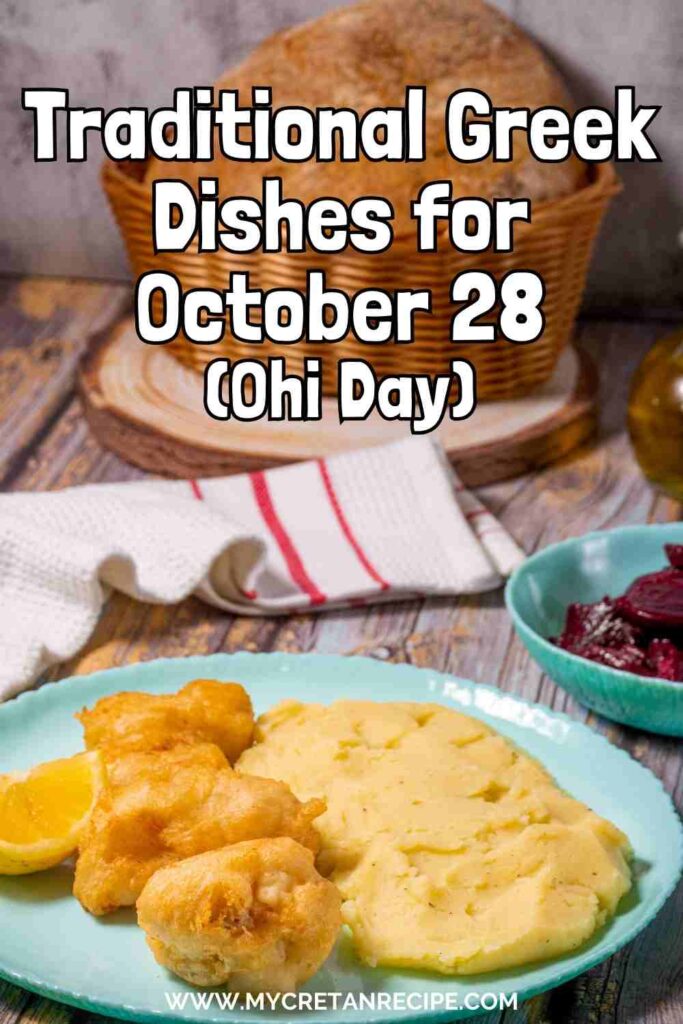
If there is one dish that appears often on Greek tables on October 28, it’s fried salted cod served with skordalia, a smooth, garlicky potato dip.

This pairing has deep roots in Greek food culture. Historically, salted cod was widely used because it could be preserved without refrigeration, transported to inland villages, and stored for months.
Over time, it became a traditional choice for religious feast days such as the Annunciation (March 25), the Transfiguration (August 6), and other celebrations.
While on October 28 Greeks are free to eat anything, fried cod and skordalia remain a beloved custom in many homes, sometimes served with beetroot salad as a refreshing side.

Bakaliaros (Fried Cod) with Skordalia (Garlic Potato Dip)
Ingredients
Ingredients for the cod
- 1 kg salted cod fillet (with or without bone)
- Oil for frying (sunflower or light olive oil)
- A little flour for dusting
For the batter
- 150 grams self-rising flour (plus extra for dredging)
- 1 ½ cups cold beer
- ½ tsp salt
- ½ tsp sugar
- 1 tbsp Cretan raki or ouzo (optional, for flavor)
For the skordalia (Garlic Potato Dip)
- 1 kg potatoes
- 5-6 cloves of garlic (adjust to taste)
- 1 cup olive oil extra virgin
- ¼ cut fresh lemon juice
- Salt and white pepper, to taste
You can also follow this Skordalia recipe
Instructions
Desalt the cod
- Cut the salted cod into serving pieces. Place them in a large bowl of water and soak for 24 hours, changing the water two or three times.
- Drain and pat dry with paper towels before cooking.
Prepare the batter
- In a mixing bowl, combine the flour, salt, sugar, and ouzo. Whisk in the cold beer gradually until smooth.
- Adjust with a little extra beer or flour to achieve a thick but pourable consistency.
Fry the cod
- Lightly dust the cod pieces with flour and shake off any excess.
- Heat the oil in a deep frying pan. Dip each piece into the batter, allow the excess to drip off, then fry until golden and crisp on both sides.
- Transfer to paper towels to drain.
Make the skordalia
- Wash and boil the potatoes in salted water for about 30 minutes, until tender but not split. Drain, cool slightly, and peel.
- Crush the garlic into a paste using a mortar or food processor.
- Combine the garlic with the potatoes, then gradually add the olive oil, vinegar, and lemon juice, beating until all is smooth and creamy.
- Serve the crispy cod alongside a generous bowl of skordalia, ideally with beetroot salad too.
Notes
- Portion Size: Approximately 200 g of cod with 100 g of skordalia per person
- Calories: Around 520 kcal per serving (including dip and frying oil)
Nutrition
Other Traditional Dishes You Can Find at the Oxi Day Table
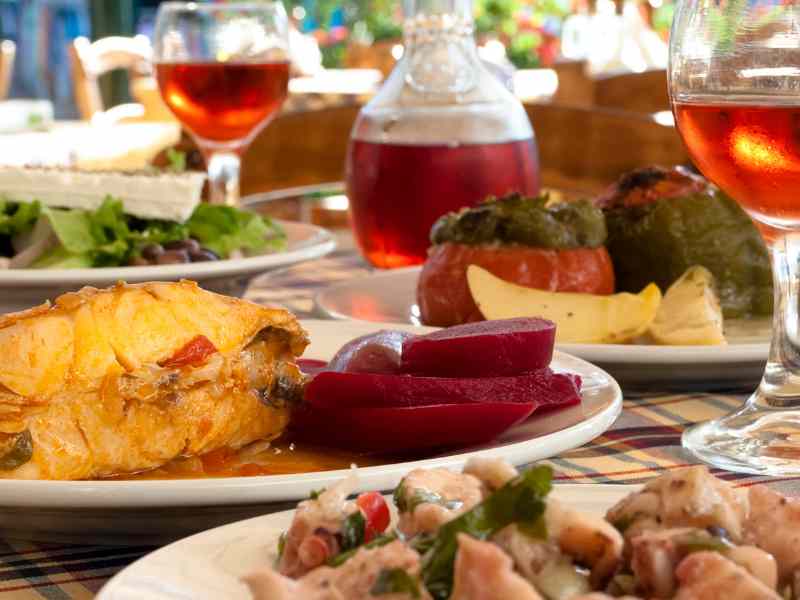
While fried cod with garlic potato dip is the most iconic dish for October 28, it’s far from the only one on the table.
Across Greece, families prepare other traditional recipes like pies, slow-cooked classics, salads, and sweets. All of them reflect local tastes and the spirit of the holiday.
These dishes often vary by region and family tradition, but all share the same purpose: to gather and celebrate the pride related to Oxi Day. Let’s discover what else to eat on October 28!
Beetroot Salad
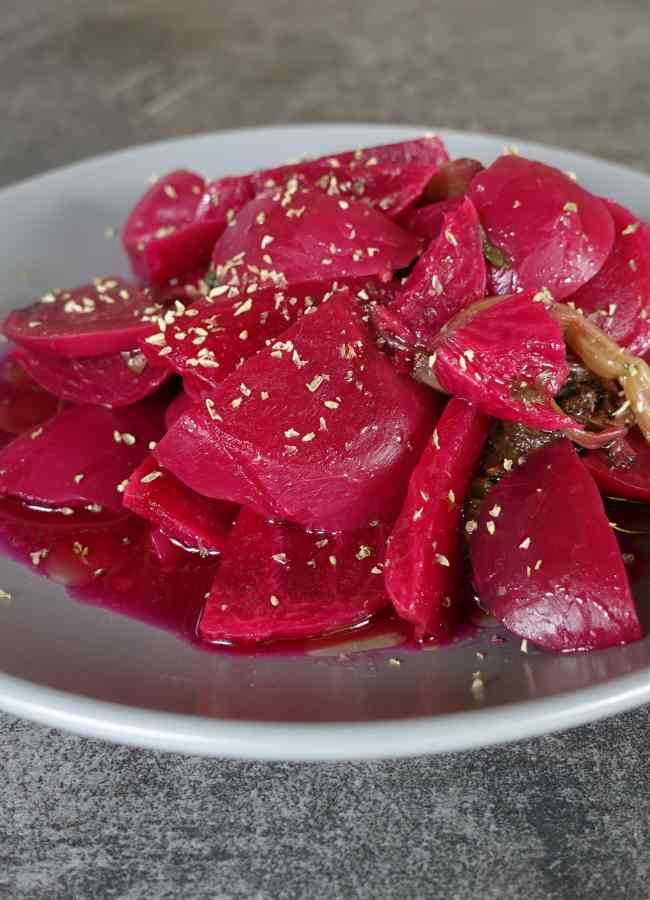
Often served with fried cod and skordalia, beetroot salad contrasts with the fried fish and garlicky dip. Typically, the beets are boiled until they are tender, peeled, and sliced, then dressed with olive oil, vinegar, and occasionally a spoonful of Greek yogurt, dried oregano, or crushed garlic. Its sweetness and acidity balance the meal perfectly.
>> Here’s a more complex beetroot dip with feta that can easily replace this beetroot salad.
Spanakopita (Spinach Pie)

Another favorite on festive tables, spanakopita is a phyllo pie filled with spinach, feta, onions, and fresh herbs. It works beautifully as an appetizer, side, or main dish and is one of Greece’s most versatile celebratory foods.
>> You can also prepare individual portions like these spanakopita triangles, perfect for a table with appetizers
Keftedes (Greek Meatballs)

Keftedes are small, fragrant meatballs made from ground beef or lamb mixed with fresh herbs, garlic, and onion. We usually fry them and serve them with tzatziki or lemon wedges.
These meatballs are easy to prepare in advance and perfect for sharing at large family gatherings.
>> Varieties include these chicken meatballs or the flavorful Soutzoukakia.
Greek Moussaka

Moussaka is one of Greece’s most famous dishes. It features layers of eggplant (and sometimes also zucchini or potatoes), spiced ground meat, and béchamel. All the ingredients are baked together into a casserole, often the main dish on special occasions.
>> If you do not eat meat, this vegetarian moussaka can be a great idea.
Fasolada (Greek White Bean Soup)

Sometimes called the national dish of Greece, fasolada is a simple (yet nourishing) soup made with white beans, carrots, celery, and olive oil. It reflects Greece’s rustic food traditions and is particularly welcome on a cool autumn day.
>> A good alternative to fasolada is Gigantes Plaki (Baked broad beans), also popular in Greece.
Loukoumades (Honey Doughnuts)

Who doesn’t enjoy loukoumades? They’re the perfect autumn dish, and that’s the reason why many families turn to loukoumades for dessert.
Loukoumades are light, deep-fried dough balls drizzled with honey and sprinkled with cinnamon or chopped nuts. They are sweet, festive, and ideal to end a celebratory meal.
Dolmades (Stuffed Grape Leaves)

In Crete, we often call them dolmadakia, but it is the same dish. Dolmades are grape leaves stuffed with rice, herbs, and sometimes minced meat, cooked and served warm or at room temperature, with a portion of Greek yogurt as the dip.
Horiatiki (Greek Village Salad)

No Greek table feels complete without a classic village salad. Fresh tomatoes, cucumbers, green peppers, onions, olives, and a thick slab of feta cheese.
All these ingredients come together simply, dressed with olive oil and sprinkled with oregano. It adds freshness and balance to any meal.
>> These Greek salad dressings are perfect if you’re looking for a slightly different flavour.
Oxi Day is a commemoration of national courage but also a reminder of the bonds of family and tradition that define Greek life… as most celebrations in the Greek calendar. Will you be preparing any of these dishes to celebrate Oxi Day at home?
MORE IDEAS


Greek Yogurt Marinade


Pin for Later!
Bakaliaros Skordalia and Other Oxi Day Dishes

Gabi Ancarola
Gabi is a travel writer who has lived in Crete for over a decade. Through her blog, Crete Insider, she has helped travelers uncover local experiences. Passionate about food and Cretan cuisine, she now attends Greek cooking lessons to bring the island’s flavors straight to your kitchen!
>> Interested in learning to cook in Crete, or discovering all of the top spots to eat in Chania and around the island? Book a food tour or plan your trip with me.


You May Also Like

Cretan Salad with Dakos: A Taste & Different Version of Dakos You Will Love!

Peanut Butter and Greek Yogurt Cheesecake
